


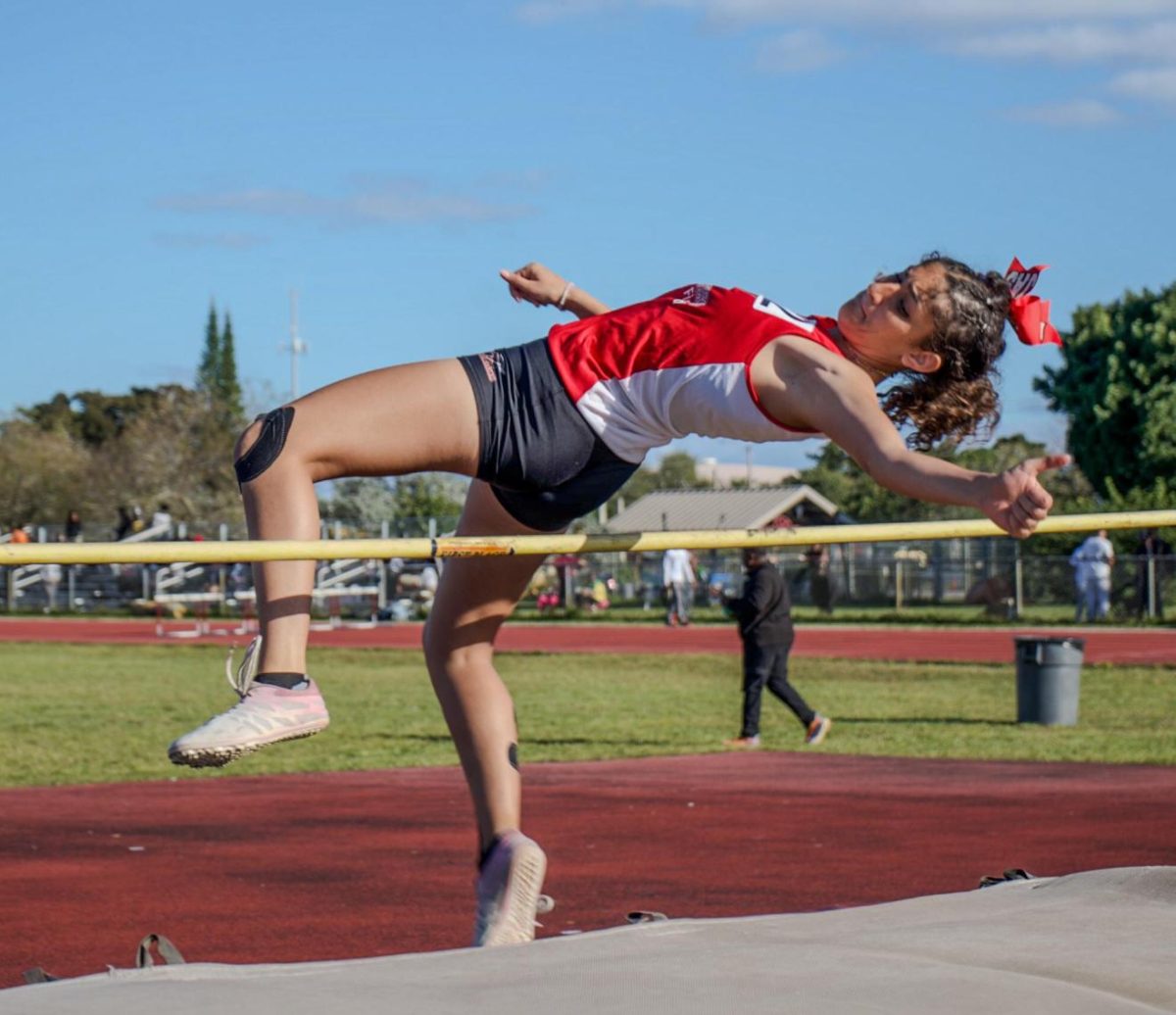
In the wake of International Women’s Day, it is important to honor those who have changed lives for women and that is extremely prominent in the world of athletics. For too long, control over women’s sport has been held in the hands of the world. But at long last, spurred by protests and viral videos, power is shifting at the elite level of female athletes. Amplifying voices one by one, five athletes share their dispersing leadership, pushing for change and use their power to generate more recognition for women and their ability and talent in sports.
Simone Biles
Born to drug-abusive parents, Biles spent her time in foster care, taking care of her siblings, only to be later adopted by her grandparents. Describing her diagnosis of Attention-Deficit/Hyperactivity Disorder as her “superpower” rather than a limitation, Biles has been involved in gymnastics and the fast-paced training that accompanies it for almost her whole life.
At the age of six, Biles began to gain an interest in gymnastics after encountering the sport on a field trip to a gymnasium. Noticing her strength and ability to learn harder moves quickly, she was already training like a teenager at the age of eight. Jumpstarting her soon-to-be Olympic career, Biles began competing in the junior elite division in 2011. Yet, her elite career took off just two years later, in which she won her first two gold medals at the Antwerp Championship.
“I feel that women, just like Simone Biles, could bring many advantages and more ideas to a team that men can’t, especially in the Olympics, where men used to take the lead. Women can do as much as men, especially in sports that are now being female-dominated,” freshman Bryan Gomez said.
As the most decorated gymnast in history, with over 37 combined World Championship and Olympic medals, Biles remains at the top of her field, fostering and nurturing her groundbreaking moves. Destigmatizing mental health struggles, Biles advocates for an athletes well-being over performance, even being a voice for sexual abuse victims and pioneering Black athletes, inspiring girls worldwide.
Serena Williams
Born and raised in a crime-ridden California, Williams has been able to overcome financial hardships and deep-seated racism to become one of the world’s most famous tennis icons. Part of a young black family in a predominantly white sport, they faced and chose to avoid junior circuits due to racist comments from other parents. Growing up in this tough environment, tennis practice sometimes meant dodging gunfire.
“Female athletes, just like Serena Williams, have shown how empowering they can be. Women can do so much more than men, in my opinion, especially in sports,” freshman Sofia Camarena said.
Williams’ determined father decided before her birth that she would become a tennis star, teaching himself the game through videos and books to train her. Beginning training at the age of three, she was already ranked with a 46-3record on the United States Tennis Association junior tour at 10 years old. After being known primarily for her older sister, Venus Williams, she has proved herself by showing off own her talents in tournaments and competitions.
Williams’ true turning point was winning her first Grand Slam singles title at the 1999 United States Open at the age of 17, beating legends to prove she was a top-tier competitor and player. Securing over 23 Grand Slam singles titles, along with 14 doubles titles with her older sister, Williams is now known for shattering racial and gender barriers in the recreational activity of tennis.
Advocating for maternity leave and improved support for working mothers, just like her, Williams has continued leveraging her platform to highlight the “motherhood penalty,” directly influencing policy changes.
Shelly-Ann Fraser-Pryce
Known as Pocket Rocket, Fraser-Pryce grew up in a violent, impoverished area in Jamaica. Raised by her two brothers and her unlicensed street vendor mother, she often ran barefoot in the street while her mom worked for fun and even once ran 400 meters home during a natural disaster, fueling her early reputation for her need for speed.
As motivation, her running was encouraged by neighbors and her mother, initially taking her shopping as she ran to the stores. At the age of ten, Fraser-Pryce began to compete in track-and-field events while still being in primary school. Her natural talent becomes ultimately clear early on, especially when at the age of 16, she ran a 100-meter in 11.57 seconds. Attending the University of Technology in Kingston, Fraser-Pryce began training formally under Coach Stephen Francis.
And just like that, she improved her best time and ended up becoming a reserve for the relay team. Her major turning point was securing second at the Jamaican Olympic trials, running 10.85 seconds and later winning the 100-meter gold at the 2008 Beijing Olympics at age 21. Fraser-Pryce is now recognized as the only female athlete to hold both World and Olympic 100-meter titles on two occasions. Competing and winning titles, even after childbirth, Fraser-Pyrce is an inspiration for mothers around the world, demonstrating how women do not just take a pause.
“As a female athlete myself, I feel like it’s empowering for women to be in sports, especially in male-dominated ones. I do taekwondo, and all around me, there are women relearning gender equality. Anybody can do whatever they put their mind to, such as how [Fraser-Pryce] was able to drive herself over her edge even competing while postpartum,” freshman Camila Padilla said.
Oksana Masters
Blamed on the 1986 Chernobyl disaster, Masters was born in Ukraine with radiation-induced birth defects, such as webbed fingers and no thumbs. Surviving years of abandonment, abuse and belittlement in several Ukrainian orphanages, she ended up being adopted by a single professor and later moved to New York and then Kentucky. Undergoing multiple surgeries, including the amputation of her left leg at age nine and, belatedly, her right at 14, Master’s medical journey has been her reason to continue growing and gain confidence.
As a way to find control over her own life, she started adaptive rowing to build strength and agility. Recovering from severe surgical complications, she found immense mental and physical liberty in competitive rowing, setting a world record by 2010. Even when Master’s passion was rowing, her injuries forced her out of the activity, leading her to discover the joy of Nordic skiing, then cycling, showing her ability to adapt.
“Everything is different from what it was before; women can do a lot more than they used to be able to do, even with a physical disability. Women can partake in the same sports as men now, and sometimes women are even better in the sports that were once only male-dominated,” freshman Alec Pernas said.
Transforming childhood trauma into endurance and excellence in sports, Masters has dominated the Paralympic Games with over 20 medals and titles in Para-rowing, Para-cycling and Para-cross-country skiing, finally having a sense of complete control over her movement and normalizing seeing women with disabilities compete in sports.
Deepika Kumari
Born to a humble driver and nurse in Jharkhand, Kumari grew up in a limited economic environment, sometimes facing hunger and becoming underweight, which she was criticized of by her coaches. Starting this path at 12, training at the Data Archery Academy, Kumari is now recognized as a trailblazing Indian archer
Developing an interest in target shooting by aiming at tropical fruits on trees with stones she found on the ground, Kumari described life at the academy as a succor, offering proper training, food and clothing. After joining another academy for professional training, she jump-started her career.
Shortly after her father’s rickshaw failed causing to struggle in funding her travel, Kumari won the Cadet World Championship, proving her efforts to be worth it. Her win made her realize her potential and gave her the confidence to excel internationally, having a cause-and-effect success. Coming from a humble background, Kumari has become the world number one in archery, which has continued to inspire young girls to pursue sports despite societal pressures and limited resources.
Despite significantly lower earnings and fewer resources, women have closed the gender gap between men and women in the srea that is sports, as they continue to define expectations with their improvements, through competition and example.


