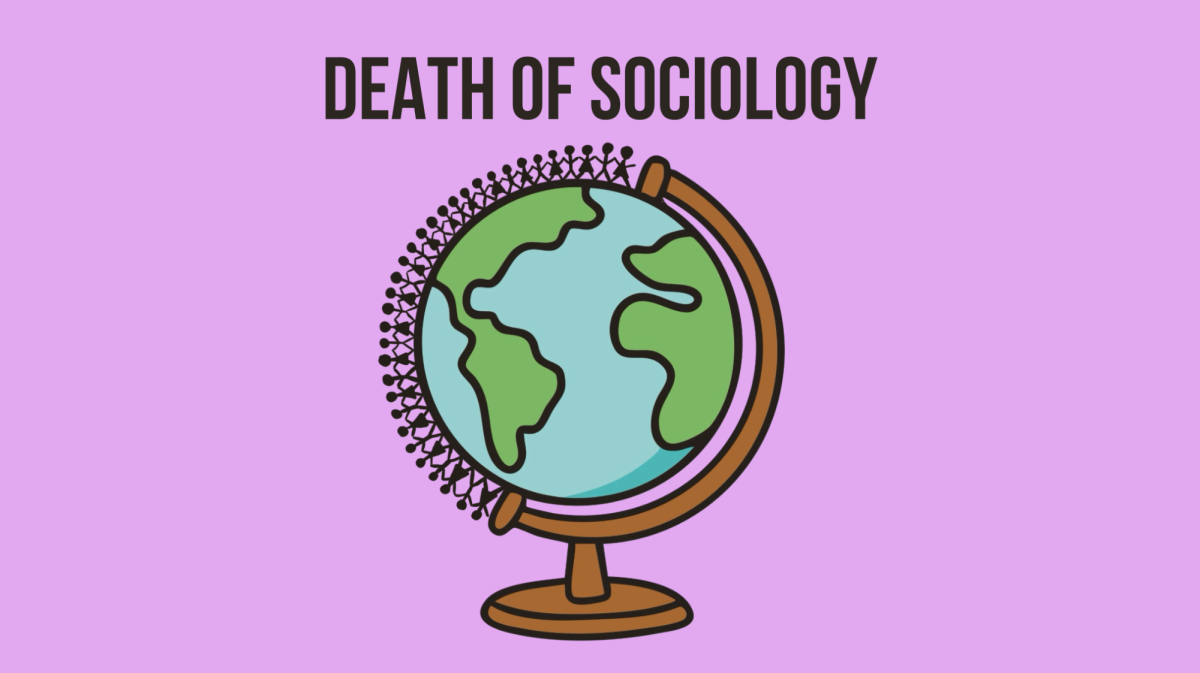
Sociology is the study of human social relationships and institutions, investigating things like the structures of organizations and how people interact within them. The aim of the study is to be able to reflect on issues within society, understand why they exist and how to resolve them. Overall presenting as a very general course, sharing information which can be applied to almost any setting. However, as of Mar. 2026, all 12 Florida Public Universities removed sociology as a part of their core curriculum, undermining students’ exposure to critical perspectives on society.
Earlier in the year, sociology was already taking a hit as the state controversially required professors to use a new textbook, one which cut out chapters regarding race and ethnicity, gender, sexuality and global inequality. The decision to cut sociology is a direct result of Florida’s restrictive political climate, embodied by the Individual Freedom Act, also known as the Stop WOKE Act. This ideology focuses on restricting how race and gender are discussed in workplaces and schools. Based on this direction Florida is moving in, it is not hard to see how a course which discusses how race and gender affect society could be removed from the core curriculum for Florida colleges.
“Personally, I think it’s quite ridiculous to remove chapters about race and gender because erasing them from the curriculum doesn’t erase those thing for the real world. Removing education on these topics just means that people will be less educated, and therefore more ignorant regarding them,” sophomore Conrad Booth said.
Along with students, many professors and advisors find this removal ridiculous. Ray Rodrigues, Chancellor of the State University System, described the removal of sociology as a “suicide” due to the fact that, from conservative perspectives, the course has overall become too liberal, with a hyper-focus on activism and advocacy, rather than the roots behind society. By framing this course as a vehicle to ‘promote liberal ideologies,” the state justifies the removal of the course. The negative feedback that comes from not only students but professors proves that this action has affected lives across many campus’s.
“It is crazy to see how almost anything is considered political nowadays, seeing as sociology is a course discussing social structures and how they have transformed society, I would think that regardless of political standings, someone could find value within the course,” sophomore Sofia Caputo said.
Removing sociology from the core curriculum unfairly harms students, especially those pursuing a career that requires an understand of social systems. For instance, Pre-med students, who are required to understand sociology and the issues it accompanies in order to succeed on the Medical College Admission Test (MCAT), are no longer able to take the class as part of their core curriculum. This means that many scholarships and financial aid packets, such as Florida’s Bright Futures, may not cover sociology courses. Therefore, when these pre-med students are preparing to take the MCAT, they will have to self-study sociology, on top of reviewing the wide range of natural sciences from their courses.
“As someone who wants to become a professional within the medical field, it super frustrating to see how our state policies could prevent students from succeeding by removing the sociology courses from the core curriculum, making them less accessible, sophomore Lilia Cueto said.
“Although I took related courses in psychology that included aspects of sociology, I can’t imagine not having the opportunity to take sociology itself. That’s an entire semester (or more) of material students may now have to teach themselves, on top of the many prerequisite courses pre-med students already have to complete and review for the MCAT,” pre-med student at NYU, Ivanna Dominguez said.
This drastic removal of a course which is vital for understanding social systems and how they have developed, leads faculty, students, and bystanders to wonder what will happen next. Most likely, students will pay the price for this decision, attempting to self study the complexity of sociology while losing access to a course that prepares them for the real world. Now, professors of certain courses such as history, political science, and even some literature courses are wondering if they will be the next courses to be targeted.
Ultimately, the removal of sociology from Florida’s core curriculum is not just about one class being taken away, it shows a much larger attempt to control what students are allowed to learn and question. Sociology encourages students to think critically about the systems shaping everyday life. Silencing these conversations does not make the issues disappear but it creates a generation of students who are less prepared to understand the world around them. Students deserve an education that challenges them to think deeply and engage with diverse perspectives not one that avoids difficult topics for the sake of ideology.